
Uncategorized
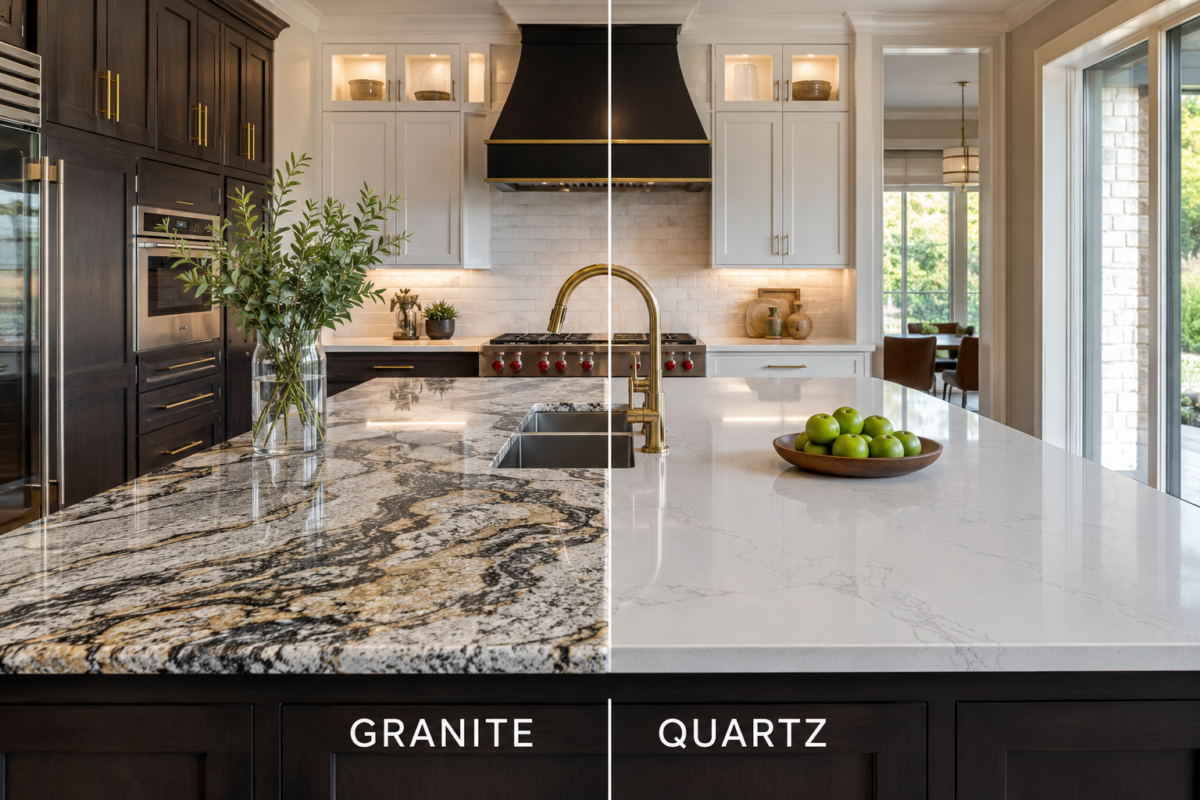
Granite vs. Quartz Countertops: Which Is Right for Your Kitchen?
Jun
Whether you’re designing a luxury hotel kitchen in Chicago, renovating a residential property in Madison, building multifamily units in Milwaukee, or managing a commercial project in Merrillville, selecting the right countertop material is a decision that affects aesthetics, durability, maintenance, and long-term value.
Among today’s most popular countertop options, granite and quartz consistently lead the conversation. Both materials offer premium appearance and strong performance, but they differ significantly in composition, maintenance requirements, cost considerations, and design flexibility.
For construction companies, architects, interior designers, general contractors, and homeowners, understanding these differences can help ensure the chosen material aligns with project goals, budget expectations, and end-user needs.
Understanding the Difference Between Granite and Quartz
Before comparing performance, it’s important to understand what each material is.
Granite Countertops
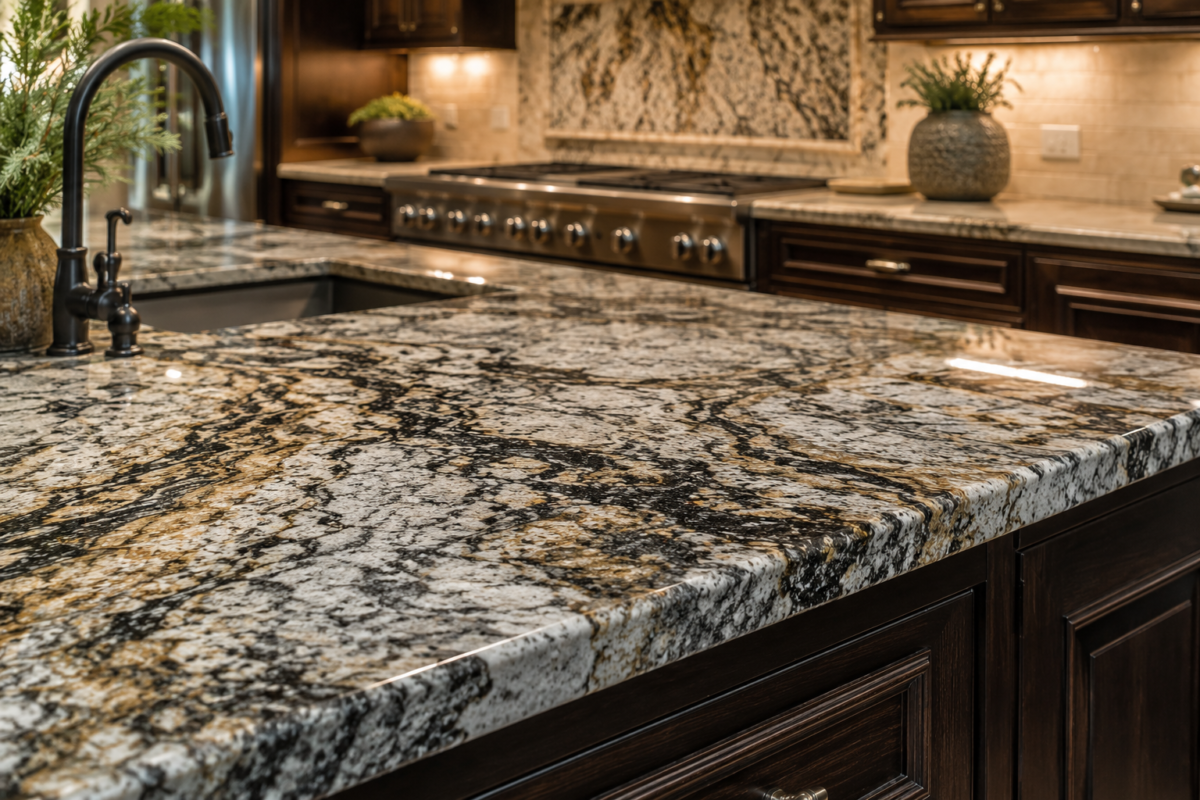
Granite is a natural stone quarried directly from the earth. Each slab is cut, polished, and finished to showcase its unique mineral composition and natural patterns.
Key characteristics:
- 100% natural stone
- Unique veining and color variations
- Heat-resistant surface
- Requires periodic sealing
- Available in a wide range of natural colors
Quartz Countertops
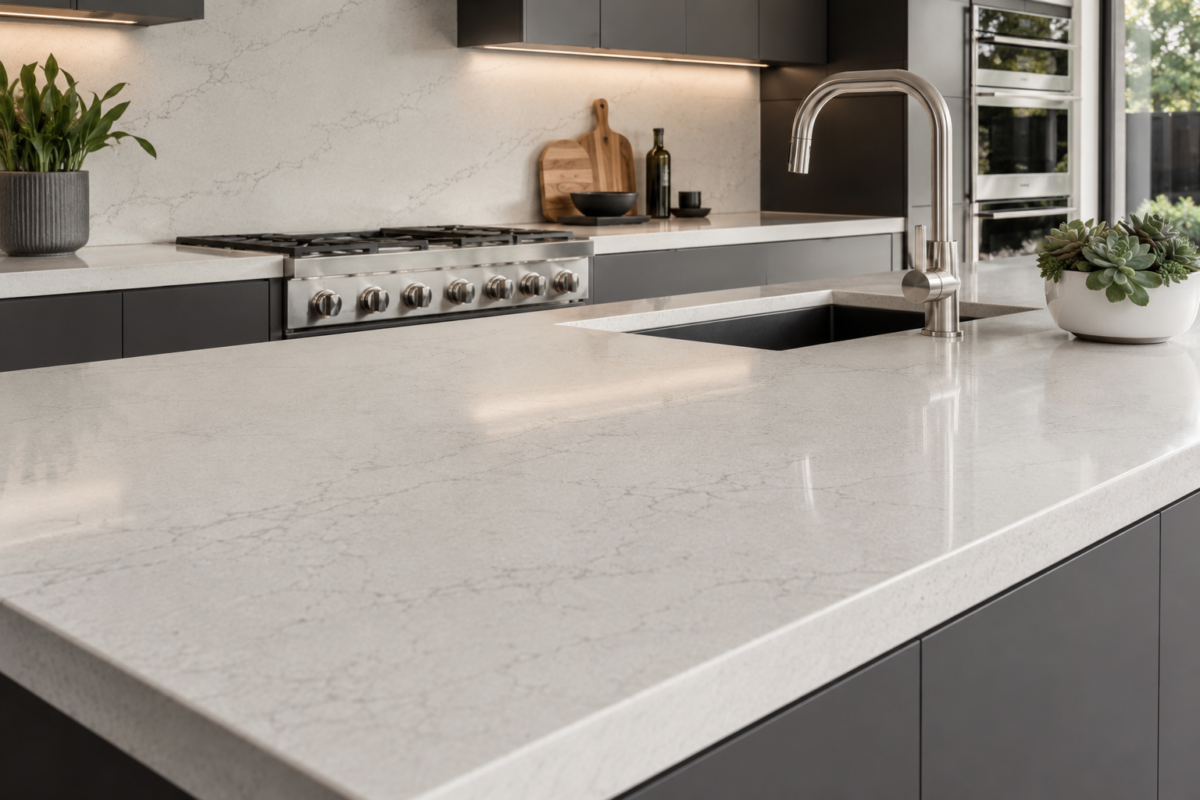
Quartz countertops are engineered stone surfaces manufactured using crushed quartz combined with resins and pigments.
Key characteristics:
- Engineered and consistent in appearance
- Non-porous surface
- Minimal maintenance requirements
- Broad range of colors and patterns
- Manufactured for uniformity
Appearance and Design Flexibility
For architects, designers, and homeowners, visual appeal often drives the initial selection process.
Granite: Natural Character and Uniqueness
One of granite’s greatest strengths is its authenticity. No two slabs are exactly alike.
Benefits of Granite Aesthetics:
- Distinctive natural movement and veining
- Organic color variations
- Creates a high-end, timeless appearance
- Works particularly well in traditional, transitional, and luxury designs
Potential Drawbacks:
- Color consistency can vary between slabs
- Matching large commercial installations may be challenging
- Design options are limited to naturally occurring patterns
Quartz: Consistency and Modern Design Control
Quartz offers a more predictable design experience.
Benefits of Quartz Aesthetics:
- Consistent color and pattern across installations
- Available in contemporary, minimalist, and marble-inspired designs
- Easier to coordinate across multiple units or large projects
- Ideal for hotels, multifamily developments, and commercial spaces requiring visual uniformity
Potential Drawbacks:
- Some homeowners prefer the authenticity of natural stone
- Repeating patterns may appear less unique than granite
Best Choice for Design Flexibility: Quartz
Best Choice for Natural Beauty: Granite
Durability and Daily Performance
Countertops must withstand years of use, particularly in busy households, hospitality environments, and commercial settings.
Granite Durability
Granite is known for its strength and resilience.
Advantages:
- Highly resistant to scratches
- Excellent heat resistance
- Performs well in high-use kitchens
- Long lifespan when properly maintained
Considerations:
- Natural porosity can allow staining if left unsealed
- Requires periodic sealing to maintain protection
Quartz Durability
Quartz is engineered to deliver consistent performance.
Advantages:
- Non-porous surface resists staining
- Does not require sealing
- Resistant to scratches under normal use
- Excellent for busy kitchens and commercial applications
Considerations:
- Less heat-resistant than granite
- Prolonged exposure to high temperatures can potentially damage resin components
Best Choice for Heat Resistance: Granite
Best Choice for Stain Resistance and Low Maintenance: Quartz
Maintenance Requirements
Maintenance often becomes a deciding factor for both residential and commercial projects.
Granite Maintenance
Granite requires a proactive maintenance approach.
Typical maintenance includes:
- Periodic sealing
- Immediate cleanup of spills
- Routine cleaning with stone-safe products
For many homeowners, the maintenance commitment is manageable. However, property managers and commercial operators often prioritize materials requiring less ongoing attention.
Quartz Maintenance
Quartz is widely valued for its simplicity.
Typical maintenance includes:
- Regular cleaning with mild soap and water
- No sealing required
- Minimal long-term upkeep
For hospitality, multifamily, and commercial environments, this convenience can reduce lifecycle maintenance costs.
Best Choice for Easy Maintenance: Quartz
Cost Considerations
Pricing varies based on material selection, edge profiles, installation complexity, and regional availability throughout Chicago, Milwaukee, Madison, and Merrillville.
Granite Cost Factors
Granite pricing depends largely on:
- Stone rarity
- Slab origin
- Color availability
- Thickness and fabrication requirements
Entry-level granite options can be competitive with quartz, while exotic slabs may command premium pricing.
Quartz Cost Factors
Quartz pricing depends on:
- Brand selection
- Design complexity
- Manufacturing specifications
- Edge treatments and installation requirements
Many mid-range quartz products fall within a similar price range as granite.
Important takeaway: Material cost alone should not drive the decision. Long-term maintenance, replacement risk, and project objectives should also be considered.
Sustainability and Environmental Considerations
As sustainability becomes increasingly important across residential and commercial construction, material sourcing is receiving greater scrutiny.
Granite and Sustainability
Granite is a natural material, but quarrying and transportation can contribute to environmental impact.
Advantages:
- Natural stone resource
- Long lifespan reduces replacement frequency
Considerations:
- Quarrying operations require significant energy
- Transportation can increase environmental footprint
Quartz and Sustainability
Quartz manufacturing involves industrial processing but may incorporate recycled materials depending on the manufacturer.
Advantages:
- Potential use of recycled content
- Long service life
Considerations:
- Manufacturing relies on resins and engineered processes
- Environmental impact varies by manufacturer
For sustainability-focused projects, evaluating supplier certifications and sourcing practices is often more valuable than focusing solely on material category.
Which Material Works Best for Different Project Types?
For Luxury Residential Homes
Granite may be the better fit when:
- Natural uniqueness is a priority
- Homeowners appreciate organic stone patterns
- Heat resistance is important
For Contemporary Residential Kitchens
Quartz may be the better fit when:
- Low maintenance is desired
- Consistent aesthetics matter
- Clean, modern design is preferred
For Hotels and Hospitality Projects
Quartz is often favored because:
- Uniform appearance across multiple rooms
- Reduced maintenance requirements
- Strong stain resistance
For Multifamily and Commercial Developments
Quartz frequently provides advantages through:
- Easier long-term upkeep
- Consistent installation results
- Predictable material availability
For Custom Architectural Projects
The choice often depends on the design vision.
Architects and designers frequently select:
- Granite for statement pieces and natural luxury
- Quartz for modern aesthetics and controlled design outcomes
Final Thoughts: Granite or Quartz?
The best countertop material ultimately depends on the goals of the project.
Choose granite if your priority is:
- Natural beauty
- Unique character
- Exceptional heat resistance
- Timeless luxury appeal
Choose quartz if your priority is:
- Low maintenance
- Consistent appearance
- Strong stain resistance
- Simplified long-term ownership
For construction firms, general contractors, architects, interior designers, hospitality developers, and homeowners throughout Chicago, Milwaukee, Madison, and Merrillville, the most successful countertop selections are those that balance design intent, maintenance expectations, budget considerations, and long-term performance.
Rather than asking which material is universally better, the more valuable question is: Which material best supports the specific needs of your project?
FAQ’S
1: Which is better, granite or quartz countertops?
Neither granite nor quartz is universally better—it depends on your priorities. Granite offers natural beauty, unique patterns, and superior heat resistance. Quartz provides a non-porous surface, consistent appearance, and lower maintenance requirements. Homeowners seeking a natural stone look often choose granite, while those wanting easy upkeep frequently prefer quartz
2: Do quartz countertops last longer than granite?
Both quartz and granite countertops can last for decades when properly maintained. Granite is a natural stone that may require periodic sealing, while quartz is engineered to resist staining and does not require sealing. The lifespan of either material depends on installation quality, usage, and maintenance practices.
3: Are quartz countertops more expensive than granite?
Quartz and granite countertops are often similarly priced, but costs vary based on material quality, color selection, slab availability, and installation complexity. Premium granite varieties and luxury quartz designs can both command higher prices. It’s important to compare total project costs rather than material costs alone.
4: Which countertop is easier to maintain?
Quartz countertops are generally easier to maintain because they are non-porous and do not require sealing. Routine cleaning with mild soap and water is usually sufficient. Granite countertops require periodic sealing to help protect against stains and moisture absorption.
5: Are granite countertops still in style?
Yes, granite countertops remain a popular choice for kitchens and bathrooms. Their natural patterns, durability, and timeless appearance continue to appeal to homeowners, architects, and designers. Granite is especially popular in luxury residential and custom-built projects.
